





Read More About Batik Singapore


Style with Purpose.



Product not found
Blog Posts
Walking through the vibrant streets of this city, we noticed something beautiful—traditional patterns blending seamlessly with modern fashion. The intricate swirls and bold motifs tell stories of heritage, yet they feel fresh and relevant today. That’s the magic of batik—a craft that bridges generations.
Singapore has become a cultural hub for preserving this artistry. At YeoMama, they honor these traditions while adding contemporary flair. Turning fabric into wearable art through a meticulous process guided by skilled artisans.
Whether you’re a local enthusiast or a curious traveler, our studios welcome you. Discover how we transform ideas into personalized masterpieces—one stitch at a time. Explore the blend of heritage and that defines our work.
Introduction to Custom Batik in Singapore
In 2009, UNESCO honored this art form, recognizing its deep cultural roots and timeless beauty. Local Peranakan influences infuse it with bold colors and intricate motifs—each pattern a testament to Singapore’s multicultural tapestry.
Today, batik enjoys a renaissance. Designers reimagine it in modern silhouettes, from sleek dresses to tailored shirts. We celebrate this revival, where heritage meets fresh style.
At YeoMama, every creation embodies a "collection of love, joy, and traditions." Our artisans blend age-old techniques with innovative touches, ensuring each piece tells a story.
Visit our Oxley Bizhub studio (65 Ubi Road 1, #01-87) Wed-Sat, 12-7PM. It’s both a workshop and cultural space—where wax-resist dyes transform fabric into wearable art.
Embrace our "batikfully yourself" approach. Whether you seek a statement outfit or a meaningful gift, your vision becomes reality here.
|
Batik Feature |
Modern Adaptation |
|
Hand-drawn motifs |
Digital precision tools |
|
Natural dyes |
Eco-friendly alternatives |
|
Traditional sarongs |
Contemporary cuts |
Top Custom Batik Singapore Providers
Three generations of craftsmanship converge at YeoMama, where every stitch honors tradition and innovation. Our Oxley Bizhub studio (Wed-Sat, 12-7PM) is a sanctuary for heritage patterns reimagined in modern silhouettes. Here, artisans hand-dye fabrics using age-old techniques—each piece a wearable heirloom.
YeoMama: A Legacy of Artistry
Since 1985, our family has perfected the balance of cultural motifs and contemporary flair. Clients adore the men’s tailored shirts, featuring bold geometric designs. For VIPs, private viewing appointments unveil exclusive collections before public release.
Golden Landmark Shopping Centre: Curated Elegance
At #03-20 390 Victoria St, discover ready-to-wear pieces like the popular statement shirt collection. Open Tues-Sat (11-7PM) and Sun (1-5PM), this mall outlet blends convenience with quality. Limited-edition collaborative drops sell quickly—arrive early.
Other Notable Studios
Smaller ateliers offer bespoke services, though YeoMama remains unmatched in scale. Compare studio intimacy versus mall accessibility when choosing where to view designs. Regardless, each location celebrates Singapore’s textile heritage with pride.
Why Choose Custom Batik Over Ready-Made?
The difference between mass-produced textiles and handcrafted artistry becomes clear the moment you touch the fabric. Machine-printed patterns lack the depth of wax-resist techniques, where every stroke carries an artisan's intention. Our canting tools create dimensional designs that shimmer with movement.
A personalized garment becomes your signature statement piece. Made-to-measure services ensure flawless drape and comfort, unlike standardized sizing. We adjust every curve to highlight your best features while honoring traditional silhouettes.
Only through bespoke creation can you access master artisans' private pattern archives. These designs evolve through decades of refinement—impossible to replicate commercially. Your style gains exclusivity while supporting cultural preservation.
|
Feature |
Ready-Made |
Artisan Creation |
|
Pattern Origin |
Digital templates |
Hand-drawn motifs |
|
Fit |
Standard sizes |
Body measurements |
|
Value |
Seasonal wear |
Heirloom quality |
While initial investment exceeds fast fashion, our garments last generations with proper care. Seasonal sale events make premium design elements more accessible. We occasionally offer discounted signature borders or limited-edition dyes.
How the Custom Batik Process Works
Transforming fabric into art begins with a collaborative journey between artisan and wearer. We guide you through each step—ensuring your vision becomes a wearable masterpiece.
Selecting Your Fabric and Design
Choose from 200+ heritage motifs or modern interpretations. Floral swirls suit a flowing dress, while geometric patterns elevate a shirt. Our digital preview tool lets you visualize combinations remotely.
Tailoring to Your Measurements
Precision matters. For corporate wear or bridal ensembles, we take 15 body measurements. Men’s shirts are cut for shoulder mobility, while dresses contour naturally. Three fittings refine the fit.
Timeline and Delivery Options
Most orders finish in 2-3 weeks. Need it sooner? Express service delivers in 7 days. Pair your piece with hand-dyed accessories—ties or scarves—for a cohesive look.
Every stitch honors your story. Start yours today.
Explore Our Batik Collections
Our latest collections blend heritage craftsmanship with contemporary elegance, offering something truly special for every wardrobe. From boardroom-ready formalwear to statement evening pieces, each design celebrates artistry with wearable versatility.
Men’s Shirts and Pants
Engineered for professionals, our wrinkle-resistant shirts feature hidden stretch panels for all-day comfort. The geometric motif series pairs perfectly with tailored pants, creating polished office ensembles.
Specialized dyes ensure colorfastness through countless washes. Choose from:
- Spread collar designs with contrast inner lining
- Short-sleeve options with breathable cotton-linen blends
- Monochromatic patterns for conservative settings
Women’s Dresses and Accessories
The convertible kebaya dress revolutionizes traditional wear with detachable embroidery panels. Layer it over sleek separates or wear it solo for gala events.
Complete your look with hand-dyed accessories:
- Ombré scarves with gold-thread detailing
- Clutch bags featuring heritage motifs
- Statement earrings inspired by Peranakan tiles
Limited-Edition and Sale Items
Our current sale includes 20% off select formalwear—perfect for upgrading work wardrobes. VIP members receive early access to collaboration pieces with renowned textile artists.
Post-festival collections offer discounted celebratory designs. These pieces maintain heirloom quality while accommodating seasonal budgets.
Visit our studios to view the artisans’ private pattern archives—available only during special sale previews.
Pricing and Value for Custom Batik
Investing in artisan craftsmanship means valuing both beauty and longevity—each piece tells a story beyond its price tag. Our shirts begin at SGD 180, while dresses start from SGD 350, reflecting the labor-intensive wax-resist techniques passed through generations.
Design consultations (SGD 50) explore motif symbolism and silhouette preferences. This fee applies toward your final purchase. Production costs scale with fabric choices—premium Japanese cotton costs 20% more than standard voile but offers superior drape.
We categorize fabrics into three tiers:
- Essential: Breathable cottons for everyday wear
- Signature: Hand-loomed textiles with intricate borders
- Heritage: Limited-run silks with gold-thread detailing
Frequent buyers unlock rewards through our loyalty program. Every fifth order earns a complimentary design refresh for existing garments. VIP members receive early sale access and waived consultation fees.
Maximize your cart during seasonal promotions. Our mid-year sale discounts accessory pairings by 30% when purchased with main garments. Bundle preservation services (SGD 75) to protect colors—we use pH-neutral tissue and archival storage boxes.
Proper care extends your garment’s lifespan indefinitely. Our artisans offer complimentary spot-treatment demonstrations and recommend annual conditioning for silk pieces. This transforms fashion into legacy.
Where to Buy: Store Locations and Hours
Finding the perfect blend of artistry and accessibility starts with knowing where to look. We offer two distinct experiences—an immersive studio and a convenient mall outlet. Each space reflects our commitment to quality while catering to different shopping preferences.
YeoMama Studio at Oxley Bizhub
Visit our creative hub at 65 Ubi Road 1 (#01-87) Wednesday through Saturday, 12-7PM. The studio environment lets you view artisans at work and understand the craft's intricacies. Free parking and MRT access (Tai Seng Station) make visits stress-free.
This location specializes in made-to-order pieces and private consultations. Corporate clients appreciate our bulk order cart system—we streamline measurements and design approvals for teams. After-hours appointments are available for VIP customers.
Golden Landmark Shopping Centre
Our boutique at 390 Victoria St (#03-20) operates Tuesday-Saturday (11-7PM) and Sunday (1-5PM). The mall setting offers quick access to ready-to-wear collections. Nearby parking and Bugis MRT station provide excellent connectivity.
This outlet carries exclusive pieces not found online or at our studio. Limited-edition collaborations often debut here first. Weekend visitors enjoy complimentary styling advice with any purchase.
Both locations showcase our full range, but the studio offers deeper engagement with the creative process. The mall provides immediate gratification for those seeking instant wardrobe updates.
Tips for Caring for Your Custom Batik
Like fine art, handcrafted textiles need thoughtful maintenance to retain their vibrant stories. We share our artisans’ preservation techniques to help your garments age gracefully.
Hand-wash delicate pieces in cool water with pH-neutral soap. Gently swirl the fabric—never wring or scrub. Air-dry away from direct sunlight to prevent dye migration. For stubborn stains, dab with vinegar solution before washing.
Partner with specialized dry-cleaners who understand wax-resist fabrics. Our recommended providers use hydrocarbon solvents instead of harsh chemicals. For heirloom-quality silks, request museum-grade cleaning.
Store folded items with unbleached cotton interleaving to prevent creases. Cedar-lined wardrobes deter moths naturally. Rotate wearable art every 3 months to evenly distribute stress on fibers.
Refresh your style by pairing heritage motifs with modern accessories. Try contrasting solid-color belts or metallic jewelry. We offer complimentary virtual restyling consultations for repeat clients.
For repairs, our artisans can reapply wax details or reinforce frayed edges. Heirloom restoration services revive faded colors using original dye formulas. Each treatment honors the garment’s history.
|
Care Aspect |
Essential |
Heritage |
|
Washing Frequency |
After 3-4 wears |
Annual professional care |
|
Storage |
Cotton garment bags |
Acid-free tissue boxes |
|
Revitalization |
Steam refresh |
Hand-reapplication of dyes |
Conclusion
Artistry meets individuality in every handcrafted piece we create. By choosing bespoke designs, you honor cultural heritage while embracing modern style. Each garment reflects meticulous craftsmanship—a tribute to generations of skill.
Visit our studios during extended festive hours for exclusive previews. This season, we’re collaborating with emerging designers to reimagine classic motifs. Limited slots are available for private consultations.
Let’s craft your story together. Book a design session today and wear artistry that speaks to your soul.
FAQ
Where can I find personalized batik designs in Singapore?
We offer bespoke services at our studios in Oxley Bizhub and Golden Landmark Shopping Centre. Explore unique patterns tailored to your style.
What makes custom batik different from ready-made pieces?
Each creation reflects your individuality—from fabric choice to motifs. Our artisans handcraft every detail for a perfect fit and distinctive look.
How long does the creation process take?
Typically 2-4 weeks, depending on design complexity. Rush orders may be available—ask our consultants for tailored timelines.
Do you offer men’s and women’s collections?
Yes! Discover shirts, pants, dresses, and accessories in our curated lines. Seasonal sales feature exclusive limited-edition pieces.
What’s the best way to care for handmade batik?
Hand wash in cool water with mild detergent. Avoid wringing—gently press water out and air dry away from direct sunlight.
Can I visit your physical stores to view collections?
Absolutely. Our Oxley Bizhub flagship and Golden Landmark outlet welcome visitors during business hours. Schedule an appointment for personalized styling.
Are accessories available to complement outfits?
Indeed. Scarves, clutches, and pocket squares complete your ensemble. Mix and match from our heritage-inspired accessories range.
Walking through Singapore’s vibrant streets, we often admire the intricate designs adorning fabrics—bold colors, delicate florals, and mesmerizing motifs. These patterns tell stories, bridging cultures across Southeast Asia. They belong to batik, a UNESCO-recognized art form with deep significance.
More than just fabric, batik represents a living cultural heritage. Its patterns blend influences—Arabic calligraphy, European florals, and Chinese symbolism—creating a visual dialogue between traditions. This artistry isn’t confined to museums; it thrives in modern fashion and ethical craftsmanship.
Deputy Minister Angela Tanoesoedibjo highlights batik’s dual role: a cultural ambassador and an economic force. Over 3,000 artisans in Indonesia rely on it, and Singapore’s position as a regional hub amplifies its reach. Here, tradition meets innovation, preserving history while fueling creativity.
The Batik Economy Contribution to Singapore: Key Data and Trends
From boutique displays to neighborhood stalls, these textiles weave a tale of heritage and innovation. In 2023, imports reached US$6.91 million, securing the city-state as Indonesia’s third-largest export destination. This vibrant trade reflects Singapore’s role as a regional hub for artisanal craftsmanship.
Singapore’s Import Value of Indonesian Batik
While Japan leads with US$24.24 million in imports, Singapore’s demand stands out for its blend of luxury and accessibility. Batik Air’s 36-aircraft fleet further supports this exchange, with 80% seat occupancy on Kuala Lumpur–Singapore routes.
Batik’s Role in Singapore’s Fashion and Home Décor Markets
We see luxury Batik in Orchard Road boutiques—think RISIS’ orchid motifs or Charles & Keith’s printed handbags. Meanwhile, HDB shops offer affordable options, proving its versatility. The home décor market embraces these fabrics, merging tradition with modern aesthetics.
Consumer Demand and Purchasing Power in Singapore
A 2023 survey revealed 78% of consumers here pay premiums for authentic hand-dyed pieces. This appetite fuels designer collaborations, ensuring Batik remains relevant in global fashion. The numbers speak volumes: where culture meets commerce, creativity thrives.
Batik’s Cultural Significance in Singapore’s Heritage
In Singapore’s cultural mosaic, few art forms bridge communities like these wax-resist textiles. They stitch together histories, from 19th-century Straits Settlements to today’s SG50 celebrations. Each motif—a chrysanthemum or phoenix—carries layers of meaning, reflecting a connection that transcends borders.
Shared Cultural Ties Between Singapore and Indonesia
The Peranakan kebaya’s evolution tells this story best. Originally worn by Nyonya women, modern designers like Esther Chua now reinterpret its patterns for National Day Parade costumes. Over 200 participants monthly learn these techniques at the Malay Heritage Centre, preserving a craft that Giriloyo Village’s 4,000+ tourists also celebrate.
A Symbol of Multicultural Identity
Tiong Bahru Market’s murals blend hawker culture with intricate motifs—kopitiam cups framed by swirling vines. This fusion mirrors Singapore’s identity, where artisans like Ms. Siti Nurhaliza keep traditional wax-resist methods alive. For consumers, these pieces aren’t just decor; they’re heirlooms.
Integration in Festivals and Events
From lantern festivals to textile fairs, these designs take center stage. Below, key events showcase their role in communal celebrations:
|
Event |
Cultural Significance |
Festival Motifs |
|
River Hongbao |
Chinese New Year displays featuring peony designs |
Prosperity symbols in crimson and gold |
|
Hari Raya Light-Up |
Malay heritage showcased in geometric prints |
Islamic star-and-crescent motifs |
|
Singapore HeritageFest |
Workshops on Peranakan embroidery |
Floral kebaya patterns |
Such events prove that cultural significance isn’t confined to museums. It dances in streets, markets, and the hands of master artisans.
Batik’s Role in Singapore’s Tourism Growth
Singapore’s tourism scene thrives on unique cultural experiences—where artistry meets adventure. These textiles aren’t just souvenirs; they’re gateways to immersive storytelling. From airport installations to luxury hotels, visitors engage with heritage in unexpected ways.
Batik-Themed Tourist Attractions and Workshops
Changi Airport’s Terminal 4 dazzles with a kinetic sculpture inspired by traditional motifs. Over 10 million travelers pause yearly to admire its swirling patterns—a silent ambassador of regional craftsmanship.
Sentosa’s new Batik Wonderland merges tech and tradition. Its 4D theatre transports guests through Java’s workshops to modern runways, showcasing the fabric’s evolution.
Batik Air and Its Impact on Regional Tourism
With 80% seat occupancy on Kuala Lumpur–Singapore routes, this airline fuels regional travel. Its business class expands access to Jeddah and Istanbul, positioning Singapore as a hub for art-inspired journeys.
Collaborations Between Artisans and Hospitality
Raffles Hotel’s Batik Butler service lets guests dye custom garments—a nod to slow fashion. Meanwhile, Fullerton Hotel’s afternoon tea (SGD 98/pax) pairs local beverage blends with hand-stamped napkins.
|
Experience |
Location |
Key Feature |
|
Batik Afternoon Tea |
Fullerton Hotel |
Artisan-stamped linen |
|
Changi Kinetic Art |
Terminal 4 |
10M+ annual views |
|
Custom Dyeing |
Raffles Hotel |
Personalized garments |
These initiatives reveal the potential of cultural partnerships—transforming tourism into a tactile, memorable work of art.
Future Potential of Batik in Singapore’s Economy
The fusion of tradition and innovation is reshaping how we experience cultural craftsmanship in modern markets. With a projected 12% annual growth, these textiles are no longer confined to fabric—they’re catalysts for cross-industry collaboration.
Innovations in Batik Products and Designs
TWG Tea’s patent-pending packaging—featuring hand-stamped motifs—showcases how heritage meets consumer products. Meanwhile, NTU’s nano-dyes reduce water use by 60%, merging eco-consciousness with vibrant hues.
We see this evolution in fashion too. RISIS’ gold-threaded scarves and Charles & Keith’s limited-edition clutches prove that artistry thrives when paired with modern demand.
Government and Private Sector Initiatives Supporting Batik
The DesignSingapore Council’s SGD 2M fund accelerates tech-driven dye techniques. OCBC’s sustainability-themed investments, attracting SGD 150M, highlight how cultural assets fuel financial potential.
Indonesia’s Gernas BBI campaign—boosting sales by 41%—offers a blueprint for public-private synergy. Here, grants and training programs empower artisans to scale ethically.
Sustainability and Ethical Production Trends
From solar-powered workshops to blockchain-tracked supply chains, transparency is key. Small brands like Bhumi Ethical now dominate niche markets, proving that ethical fashion isn’t a trend—it’s the future.
As DBS forecasts steady growth, one truth emerges: when culture and commerce align, they create ripples far beyond the loom.
Conclusion
Beyond fabric, these designs symbolize resilience—a bridge between past craftsmanship and future innovation. With a SGD 28M annual impact, batik fuels retail and tourism, blending cultural heritage with contemporary demand.
Singapore shines as a hub for reinventing traditions. Support local artisans during the Great Singapore Sale—choose certified pieces that honor authenticity. Ahead of the 2025 ASEAN Tourism Forum, batik’s role in regional diplomacy grows.
We envision a future where this art form earns UNESCO recognition. Explore its significance through Singaporean batik collections, where every motif tells a story. Here, creativity and potential know no bounds.
FAQ
How does batik influence Singapore’s fashion market?
The intricate patterns and heritage behind batik make it a sought-after choice in fashion. Designers blend traditional motifs with modern styles, appealing to both local and international consumers.
What cultural connections does batik share between Singapore and Indonesia?
Batik serves as a bridge between the two nations, reflecting shared histories and multicultural influences. Its presence in festivals and daily wear highlights this deep-rooted connection.
Are there batik-themed experiences for tourists in Singapore?
Yes! Workshops, exhibitions, and even hotel collaborations showcase batik craftsmanship. These immersive experiences attract visitors eager to learn about its artistry.
How is sustainability shaping the future of batik production?
Ethical practices and eco-friendly dyes are gaining traction. Artisans and brands focus on preserving tradition while adopting sustainable methods to meet global demand.
What role does Batik Air play in regional tourism?
As a cultural ambassador, Batik Air enhances travel connectivity while promoting the craft’s heritage. Its branding reinforces the art form’s significance across Southeast Asia.
Walking through the vibrant halls of the Asian Civilisations Museum, we paused at a stunning batik display. The intricate patterns told stories of heritage—each swirl and dye a testament to generations of craftsmanship. It was a moment where past and present collided beautifully.
Singapore has long been a crossroads for cultures, and batik reflects this rich exchange. From family workshops to high-fashion runways, this textile art continues to evolve. Today, it’s not just fabric—it’s a bridge between tradition and innovation.
Museums here celebrate batik as both history and living art. The Peranakan Museum, for example, blends play with learning through interactive exhibits. Visitors of all ages connect with the craft in unexpected ways.
We invite you to explore how this ancient art form thrives in a modern world. Discover its journey from regional trade to UNESCO recognition—and why it remains a vibrant part of Singapore’s identity.
The Cultural Significance of Batik in Singapore
UNESCO’s 2009 designation didn’t just preserve batik—it reignited a cultural conversation. This art form, once confined to royal Javanese courts, now thrives as a symbol of shared heritage. In Singapore, it bridges communities, economies, and generations.
Batik’s Historical Roots in Southeast Asia
The relationship between batik and spirituality traces back centuries. Ceremonial cloths like the Javanese dodot, displayed at Raffles Library in the 1920s, were believed to carry protective powers. By the 1960s, working women adopted batik sarong kebayas—a blend of tradition and practicality.
Singapore’s Role as a Batik Hub
Post-WW2, the island became a melting pot for cloth artisans. Immigrants brought traditional batik methods, fueling a textile renaissance. The 1994 APEC summit showcased its diplomatic weight, with leaders wearing Iwan Tirta’s designs.
UNESCO Recognition and National Identity
When batik earned UNESCO status, it cemented its role in Singapore’s multicultural tapestry. PM Lee’s 2019 National Day outfit—a modern twist on classic motifs—proved its enduring relevance. Today, it’s not just fabric; it’s a legacy woven into the nation’s identity.
Batik Tourism Singapore: Experiences and Activities
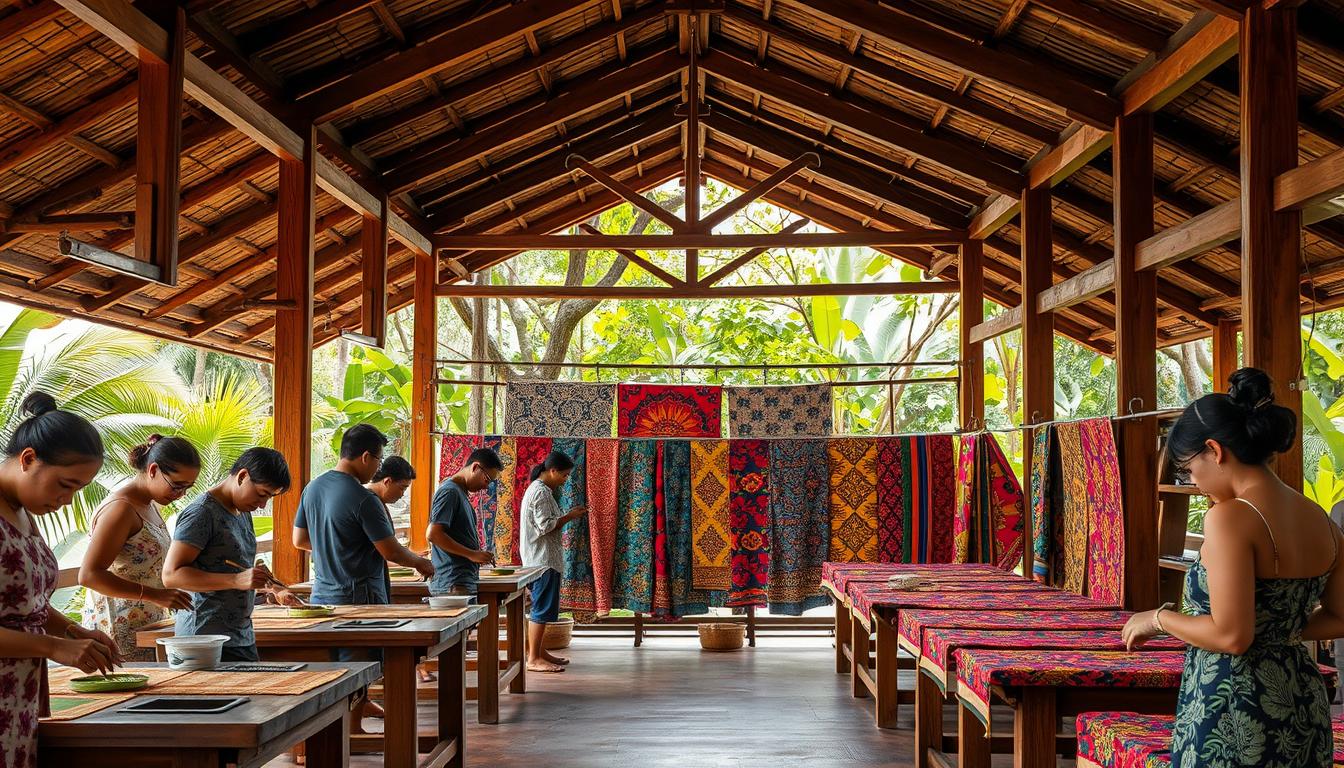
Families gather around wooden frames, transforming blank cloth into storytelling canvases. Across the city, creative activities bring textile traditions to life through hands-on exploration.
Hands-On Workshops: Batik Painting and Dyeing
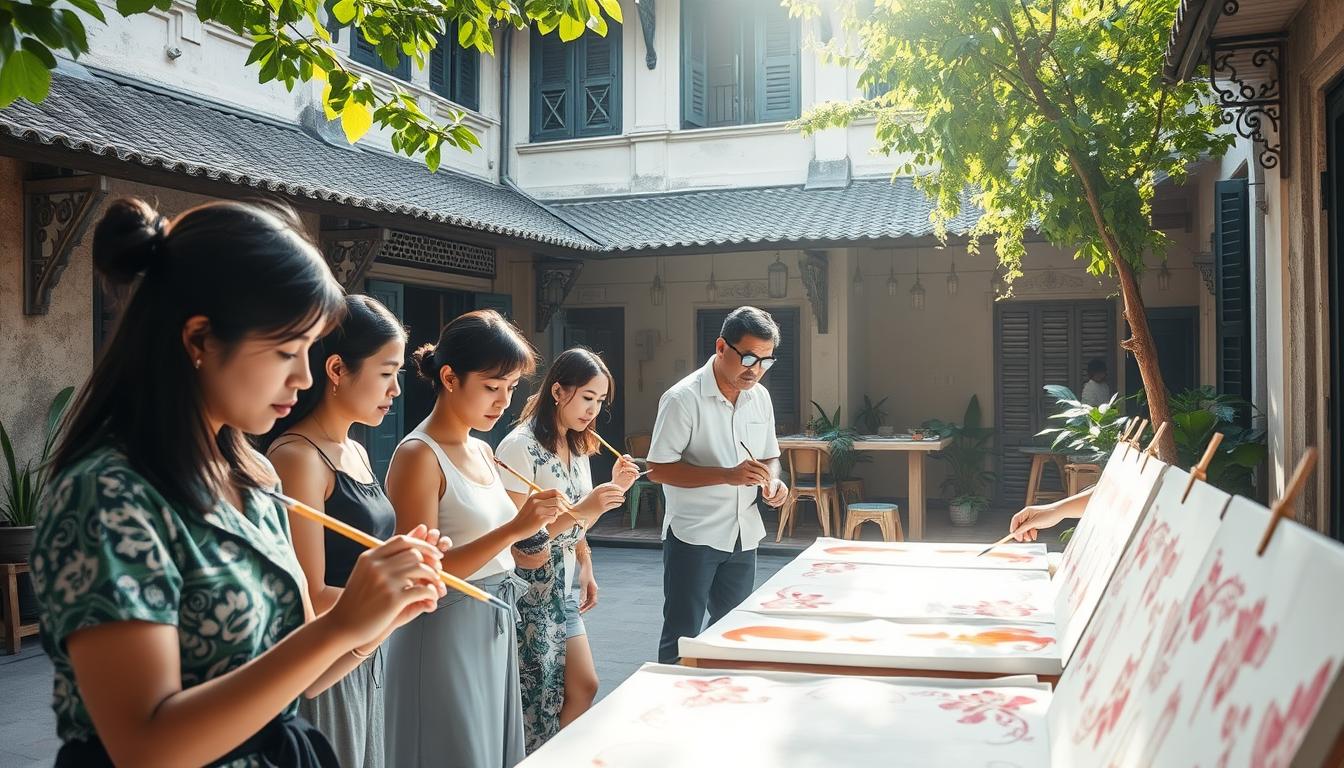
The Plant-to-Palette experience reveals nature’s color secrets. Participants extract hues from local flowers, applying them with floral wax stencils. Traditional tjanting tools let beginners master wax-resist techniques in just one session.
For deeper immersion, weekend programmes guide visitors through entire creation cycles. From sketching motifs to final dye baths, each step honors centuries-old methods.
Exhibitions Like "Batik Nyonyas" and "Batik Kita"
The current exhibition Batik Nyonyas spotlights female entrepreneurs across three generations. Interactive displays showcase business ledgers alongside vibrant textiles.
At the Amazing Sarong installation, scent stations and audio narratives create multisensory journeys. Touchable fabric samples reveal how patterns vary across island communities.
Family-Friendly Programs at Peranakan Museum
Children ages 7+ adore the activity trail at Asian Civilisations Museum. They hunt for hidden motifs while learning cultural symbolism.
The Peranakan Museum’s Little Crafts sessions blend play with heritage. Families create plush toys with mini batik painting elements or design wayang kulit puppets wearing traditional patterns.
School groups often book AEP programmes, where art meets history through textile projects. These accredited sessions make heritage tangible for young learners.
Modern Batik Innovations: From Fashion to Politics
Corporate boardrooms now showcase an unexpected art form on tailored suits and statement scarves. What began as ceremonial cloth has evolved into a dynamic medium for contemporary expression—blending heritage with cutting-edge design.
Contemporary Batik Designs by Singaporean Artists
Pioneering artist Sarkasi Said transforms textiles into political canvases. His outfits feature bold motifs critiquing consumerism, merging traditional wax techniques with street-art influences.
Labels like Baju by Oniatta redefine wearability. Their Japanese-Malay fusion pieces use plant-based dyes, offering sustainable alternatives to fast fashion.
Batik in Corporate and Diplomatic Spaces
NAFA’s reinterpreted sarong kebaya suits empower working women. These sleek ensembles bridge business professionalism and cultural pride.
Government institutions and banks now adopt batik-inspired dress codes. The Tong Tong Friendship Store’s cheongsam hybrids are particularly favored for diplomatic outfits.
The Iconic Singapore Airlines Sarong Kebaya
Since 1966, Pierre Balmain’s uniform design has epitomized elegance. The signature sarong kebaya silhouette combines French couture with Southeast Asian motifs.
Industrial wax-printing ensures consistency across thousands of uniforms. Yet each piece retains handcrafted charm—a testament to enduring artistry.
- Art meets industry: Digital printers replicate complex patterns once drawn by hand.
- Cultural diplomacy: World leaders receive batik shirts as state gifts.
- Future-forward: Young designers experiment with 3D-printed wax resists.
Conclusion: Embracing Batik’s Legacy Today
From royal courts to contemporary galleries, this craft remains a vibrant thread in our cultural fabric. Its journey—from ceremonial cloth to high-fashion statements—reflects a living tradition that adapts without losing its soul.
Extended museum hours and weekend workshops make exploration effortless. Join registered programmes like "Bunga Rampay" to create your own floral-inspired designs. Every participation supports the artisans keeping this art alive.
Here, batik isn’t just preserved—it’s reimagined. Through shared stories and hands-on experiences, we honor its past while shaping its future. The way forward is woven together.
FAQ
What makes batik unique in Singapore’s cultural scene?
This art form blends Malay, Peranakan, and Chinese influences—creating intricate patterns with deep symbolism. Singapore preserves these traditions while infusing contemporary flair.
Where can visitors experience batik workshops?
The Peranakan Museum and local studios offer hands-on sessions. Guests learn wax-resist techniques and create their own designs—perfect for families and solo travelers alike.
How has UNESCO recognition impacted batik’s popularity?
The 2009 UNESCO heritage listing boosted global interest. In Singapore, it elevated exhibitions like "Batik Kita," celebrating regional craftsmanship and storytelling.
Are there batik-themed exhibitions worth visiting?
Yes! "Batik Nyonyas" showcases Peranakan heritage, while galleries feature modern interpretations by artists like Sarkasi Said. These displays highlight evolving styles.
Can I buy authentic batik clothing in Singapore?
Absolutely. From sarong kebayas at Tangs to limited-edition pieces by local designers, boutiques offer wearable art that honors tradition. Here are the tourist area you can found batik product.
Why is batik worn by Singapore Airlines’ cabin crew?
The iconic kebaya uniform—adorned with batik motifs—represents national pride. It merges elegance with cultural identity, making it a global symbol.
Walking through the vibrant streets of Kampong Glam, the intricate patterns of batik catch our eyes. Each swirl and motif tells a story—woven not just into fabric, but into Singapore’s heritage. This isn’t just cloth; it’s a living canvas of tradition and innovation.
From its Javanese roots, batik has blossomed into a symbol of local identity. Designers like YeoMama Batik and Baju By Oniatta reimagine it with modern flair. Their work bridges generations, proving that art evolves while honoring its past.
Yet, there’s a paradox. Despite its beauty, many overlook the craft behind these designs. We celebrate the champions—Desleen Yeo, Aqilah Zailan—who keep the legacy alive. Their creations aren’t just worn; they’re stories stitched in color.
As UNESCO recognition shines a light on regional preservation, we see new possibilities. Digital printing and sustainable methods push boundaries. This is more than fabric—it’s a thread connecting us all.
Introduction: The Timeless Appeal of Batik in Singapore
The Singapore Girl’s uniform transforms batik into a flying emblem of heritage. Garden city motifs adorn the kebaya, merging tradition with modern elegance. It’s a symbol recognized worldwide—yet few realize its deeper roots.
Surveys reveal 70% reserve batik for galas, missing its everyday potential. Brands like YeoMama disrupt this notion. Their athleisure line pairs wax-resist craft with breathable fabric—perfect for brunch or yoga.
Javanese artisans coined the term: *amba* (write) + *titik* (dot). Each dot tells stories of 19th-century trading ports, where cultures collided. Peranakan Chinese sarongs still echo this fusion today.
Contemporary designers act as translators. They preserve hand-drawn techniques while embracing digital printing. The result? Batik that mirrors Singapore’s fluid identity—a tapestry of old and new.
The Historical Roots of Batik in Singapore
Centuries before reaching Singapore, batik was already a royal art form. Born in Java’s 13th-century courts, its wax-resist patterns encoded social status. By the 1800s, Javanese craftsmen brought these techniques to Kampong Glam, weaving batik into the region’s multicultural identity.
From Java to Singapore: The Journey of Batik
Batik traveled along maritime trade routes, from Egyptian resist-dyeing to Java’s royal workshops. In Singapore, Javanese merchants settled near Arab Street, their fabric stalls becoming hubs of cultural exchange. The motifs they carried—like the *parang* (sword) and *kawung* (palm fruit)—held deep symbolism.
Two techniques dominated: *batik cap* (stamped) for mass appeal, and *batik tulis* (hand-drawn) for elite patrons. Today, villages like Solo and Klaten still supply materials, preserving this history.
Batik in Singapore’s Multicultural Tapestry
Peranakan communities embraced batik, adapting Javanese designs into kebayas. The *sekar jagad* ("map of the universe") motif reflected their cosmopolitan roots. Colonial-era Nonyas used batik sarongs as status markers, blending Chinese and Malay aesthetics.
|
Technique |
Process |
Cultural Significance |
|
Batik Tulis |
Hand-drawn with canting |
Royal heritage, high artistry |
|
Batik Cap |
Copper-stamped |
Accessible, trade-friendly |
This art remains a palimpsest—layered with stories of migration, trade, and adaptation. Each piece is a testament to the people who kept it alive across borders.
Current Trends: Batik in Modern Singaporean Fashion
Gypsied’s bold batik jackets sell out within hours—proof that heritage patterns thrive in urban wardrobes. With 200% year-over-year growth, these boxy silhouettes redefine cultural fashion for younger crowds. The secret? Designers treat motifs as living designs, not museum pieces.
Batik Beyond Traditional Attire: Contemporary Styles
Oniatta Effendi’s deconstructed kebayas turn heads. Her asymmetrical cuts preserve hand-drawn motifs while flattering modern silhouettes. During the pandemic, her batik face masks moved 15,000 units—a testament to practicality meeting artistry.
YeoMama’s cycling shorts sparked debate. By pairing wax-resist florals with athleisure, they challenge stereotypes. “Batik belongs in gym bags, not just gala closets,” says founder Desleen Yeo.
The Influence of Batik in High Fashion and Everyday Wear
Luxury brands take note. Devialet’s speaker covers feature batik from Javanese artisans—a fusion of sound and art form. Meanwhile, Zalora’s Gen Z-targeted capsules sell out in minutes, proving motifs resonate digitally.
Yet caution lingers. Fast fashion’s mass-produced imitations lack the soul of Sejauh Mata Memandang’s upcycled collaborations. The solution? AR virtual try-ons let shoppers appreciate craftsmanship before buying.
Innovations Shaping the Future of Batik Singapore
Sustainability meets artistry in Singapore’s evolving batik landscape. From UV-cured dyes to blockchain-tracked supply chains, the craft is embracing the modern era without losing its soul.
Digital and Sustainable Techniques in Batik Production
YeoMama’s UV-cured dyes slash water use by 60%, merging eco-consciousness with vibrant hues. Meanwhile, the Alimba system in Cirebon purifies wastewater—removing 98% of toxins.
Komarudin Kudiya’s research at ITB unlocks nature’s palette. His team transforms mangosteen peels and rambutan skins into rich, organic colors. Solar-drying systems further cut carbon footprints, proving innovation can honor tradition.
Collaborations and Global Partnerships
The UNESCO-Singapore design incubator nurtures cross-border art. NTU’s smart textiles weave batik with IoT, creating fabrics that monitor body temperature.
Temasek Polytechnic’s NFT authentication protects artisan rights. DBS Foundation fuels these advances with grants, ensuring the industry thrives for generations. Together, they’re redefining batik’s role in global fashion.
Challenges Facing the Batik Industry
Artisans like Dyah in Pekalongan spend 180 days perfecting a single piece, while factories replicate their work in hours. This gap defines the struggle of the industry—balancing tradition with survival in a fast-fashion era.
Preserving Traditional Craftsmanship in a Modern World
Only 5% of Javanese villages still practice hand-drawn batik. The process demands patience: six months for one sarong, versus three days for machine prints. Labor shortages worsen as younger generations opt for factory jobs paying $15/day.
APPBI’s Batik Mark certification aims to protect authenticity. Yet, Grab’s algorithms prioritize cheaper synthetics—92% of Shopee’s “batik” listings are screen-printed imitations. Gen Z’s perception gap deepens the crisis; 68% can’t distinguish real from fake.
Competition from Mass-Produced Alternatives
Chinese polymicro textiles undercut prices by 400%. Shein’s lawsuits reveal motif theft—artisans’ designs copied without credit. The National Heritage Board fights back with QR-code authentication, but enforcement remains patchy.
|
Aspect |
Handmade Batik |
Machine-Made |
|
Time |
6 months |
3 days |
|
Cost |
$200+ |
$5–$20 |
|
Environmental Impact |
Natural dyes |
Chemical runoff |
Hybrid models offer hope. YeoMama blends laser-cut stencils with hand-finishing, cutting time without sacrificing soul. For the people behind the craft, innovation may be the lifeline they need.
Batik as a Symbol of Singapore’s Cultural Identity
President Halimah’s batik kebaya shimmered under the Istana lights—a visual anthem of Singapore’s multicultural pride. This art form stitches together personal and national stories, from inaugural gowns to the 2023 National Day Parade’s batik-inspired stage. Here, wax-resist patterns become more than culture; they’re a living archive.
Batik in National and Personal Narratives
The National Museum’s *Batik Transcendent* AR exhibition lets visitors "touch" motifs, turning heritage into interactive data. At Changi Terminal 4, kinetic sculptures ripple with batik waves—each movement a nod to maritime roots.
Sentosa’s heritage trails deepen the connection. NFC-enabled QR codes reveal hidden stories behind motifs, like the *sekar jagad*’s map-like symbolism. For designers like Oniatta Effendi, these patterns are personal: "My grandmother’s sarongs taught me resilience through their dyes."
The Role of Batik in Cultural Diplomacy
Singapore’s Ministry of Foreign Affairs gifted batik artworks to 17 partners in 2024, weaving identity into international relations. The UNESCO *Batik for Peace* youth exchange further cements its role—Javanese artisans mentor Singaporean students in cross-border collaborations.
|
Dimension |
National Impact |
Global Influence |
|
Symbolism |
Presidential attire, National Day motifs |
Diplomatic gifts, UNESCO programs |
|
Innovation |
AR exhibitions, kinetic art |
Blockchain-authenticated artisan partnerships |
|
Engagement |
QR heritage trails |
ASEAN soft power index (+22% since 2020) |
From kebayas to blockchain, batik carries Singapore’s culture forward. It’s not just an art form—it’s a passport to shared identity.
Conclusion: The Path Forward for Batik in Singapore
In workshops from Joo Chiat to Jurong, hands transform wax into wearable poetry. The 2025 Master Plan aims for 40% youth participation—a vision SkillsFuture supports with $2,000 grants. We see promise in hybrid models: laser-cut precision paired with hand-drawn soul.
Education anchors this revival. Mandatory school modules can demystify the craft, while ASEAN treaties shield motifs from exploitation. Cirebon’s dye clusters prove sustainability fuels art—lessons for our local industry.
As Aqilah Zailan says: “Wear the story, be the legacy.” This isn’t just batik—it’s Singapore’s second skin, woven with past and possibility.
FAQ
How is batik connected to Singapore’s cultural heritage?
Batik holds deep roots in Singapore’s multicultural identity, blending influences from Javanese traditions with local innovation. Its motifs and craftsmanship reflect the nation’s rich artistic legacy.
What modern styles incorporate batik today?
Designers now fuse batik patterns into contemporary fashion—think tailored shirts, dresses, and even accessories. The art form adapts seamlessly to both high-end and casual wear.
Are there sustainable approaches to batik production?
Yes! Artisans are adopting eco-friendly dyes and digital tools to reduce waste. These innovations honor tradition while embracing environmental responsibility.
What challenges does the batik industry face?
Mass-produced imitations threaten authenticity, and younger generations often overlook this craft. Preserving its handmade essence requires education and support for local artists.
Why is batik significant to Singapore’s identity?
More than fabric, batik tells stories of heritage and unity. It’s a living symbol in national celebrations and a bridge in cultural diplomacy across the region.
Why Choose Batik Singapore?
Authentic Craftsmanship
Modern Meets Traditional
Cultural Connection
Sustainable Fashion
Modern Batik Motifs: Tradition Reimagined for Today
Men's Batik Shirt - Pathfinder
Men's Batik Shirt - Commander
Men's Batik Shirt - Legacy
Men's Batik Shirt - Sandscape
Step-by-Step Guide to Choosing Your Perfect Batik
Step 1: Choose Your Size
Step 2: Pick a Design
Step 3: Customization
Step 4: Confirm Your Order
Timeless Batik Styles: Solo, Malay, and Melayu
Solo Batik
Malay Batik
Melayu Batik
Why These Styles Endure
Comparing Batik: Malaysia vs. Singapore
| Aspect | Malaysian Batik | Singaporean Batik |
|---|---|---|
| Cultural Influence | Primarily Malay and Islamic influences | Fusion of Malay, Chinese, and Indonesian influences |
| Designs | Floral and nature-inspired motifs | A blend of traditional and modern designs |
| Colors | Bold, vibrant colors with fluid patterns | Similar to Malaysian batik but with a more subtle approach |
| Techniques | Hand-painted and block-printed batik | Primarily hand-painted with some modern adaptations |
| Cultural Significance | Often worn during formal events and festivals | Used both in traditional and modern contexts |